
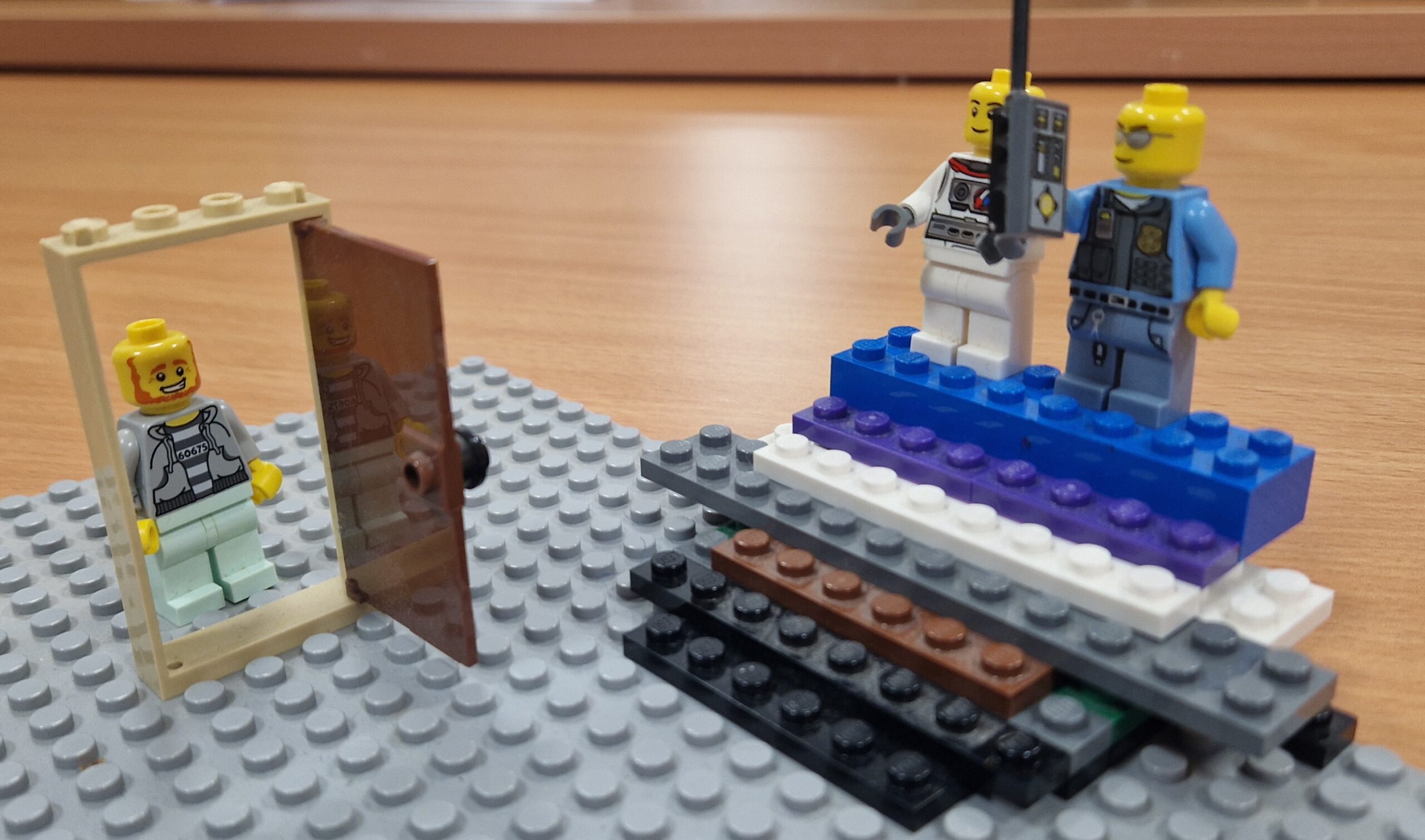
Our final week of data collection at one of the probation hubs in the North-East got underway recently, and some of our academic research team got into the spirit of the creative methods underpinning the project, using Lego as a means to open up conversation.
Participants were asked to use Lego to create a representation of their experiences of health in prison. We left it open to people to use their individual flair and were very impressed by the enthusiasm with which people approached this task and the range of different creations!
Most people built their Lego quickly and got straight to the point, often focusing on an aspect of prison which was emotive and meaningful for them. We then explored through a chat and conversation what this meant to them, building a picture of their experiences of prison and impacts on health.
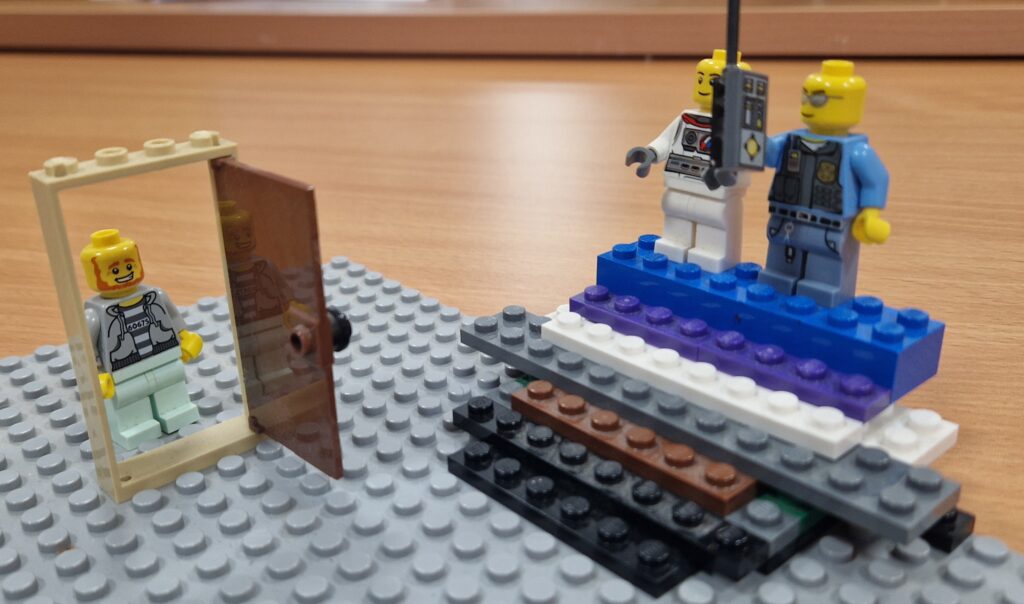
These representations of a Cat A prison vs a Cat C prison show the perceived safety and orderliness of the Cat A high security prison, in comparison to their experience of Cat B and C prisons where “You live with knowing you can get stabbed at any moment. People dying around you, noise and chaos”.
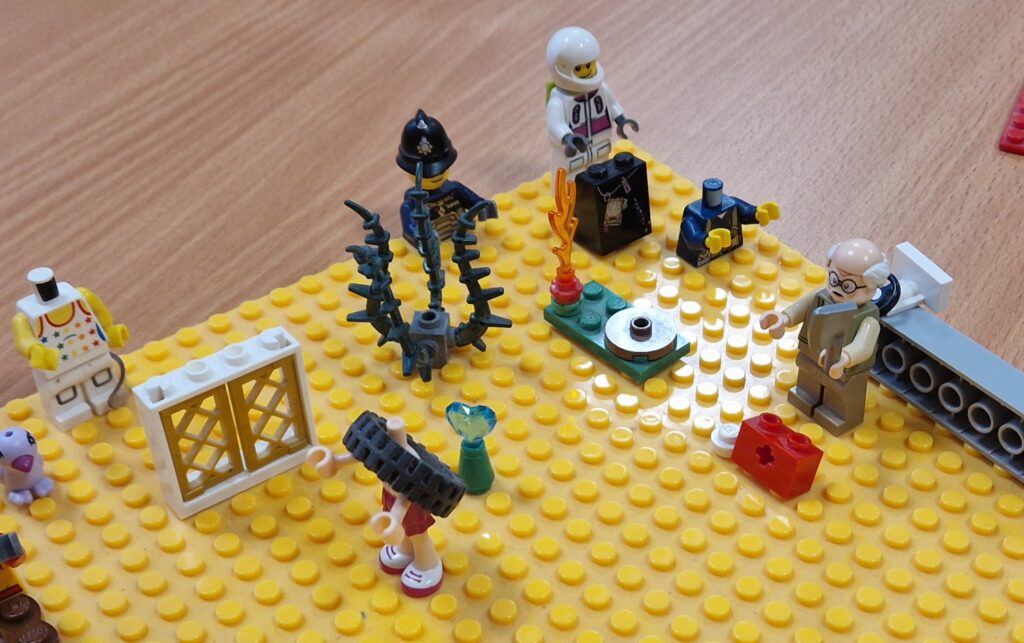
Some people chose to represent their story as a journey, demonstrating progress and personal growth. One gentleman used his Lego to represent an emotion; within his Lego building of a closed cell block, he stands buried in the middle of it all, unseen: “I’m showing you a feeling, it’s a feeling of being enclosed and hot – the heating is always blasting – and having no control”.
Whilst in-depth data analysis has not yet started, researchers noted that the Lego appeared to support the formation of in-depth reflective narratives from participants. Over the next few months, we are looking forward to getting together with our peer researchers to formally analyse the findings and build on these initial reflections. We have also begun to wonder how / if we might use Lego to share our research findings widely to initiate the change our participants emphasised is so badly needed.